Replying to an email after dinner, checking a work message at the weekend or feeling the need to keep an eye on a phone in case something urgent comes up. These situations illustrate one of the contradictions of digital work: the tools that make working more flexible can also extend the working day beyond its formal limits.
Telework has changed the relationship between physical space, time and professional activity. However, greater autonomy over where work is performed does not always mean greater control over personal time. The ability to connect from almost anywhere can make the boundary between work and rest increasingly difficult to define.
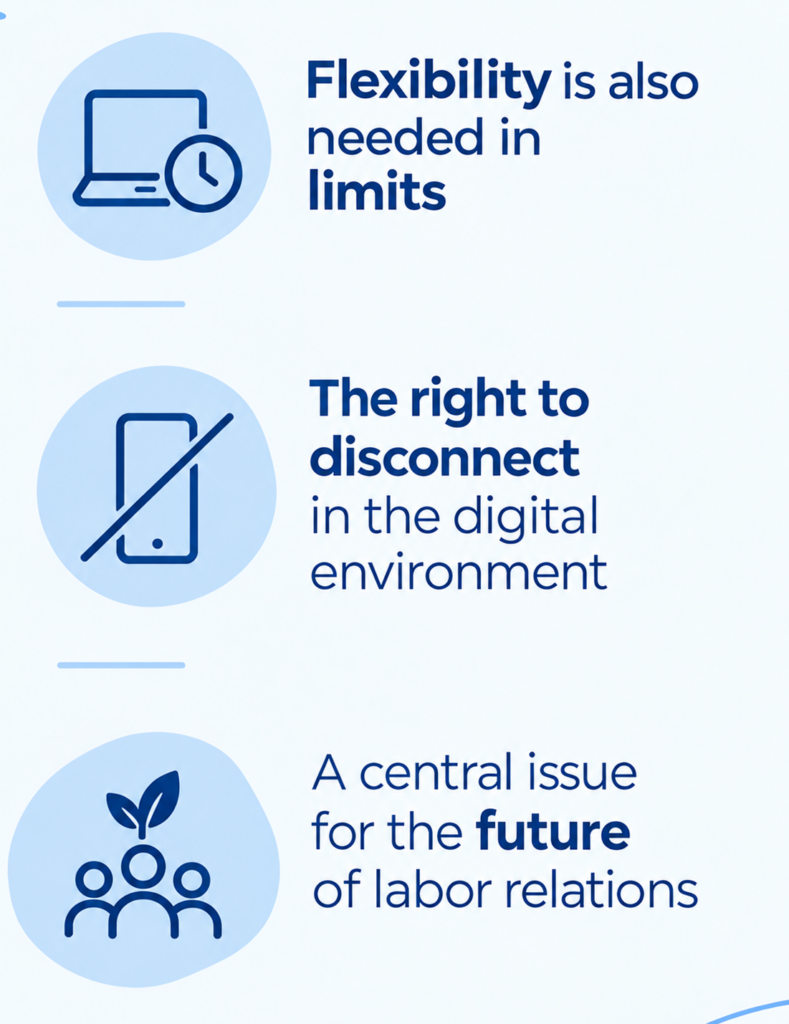
Flexibility also needs boundaries
Flexible working arrangements can improve work–life balance and reduce some of the difficulties associated with commuting. However, their benefits largely depend on how tasks are distributed, what is expected in terms of availability and whether rest periods are respected.
When work-related communications regularly extend beyond scheduled hours, the problem is no longer an isolated notification. Constant availability can become an informal expectation, particularly for workers who feel they must respond quickly to demonstrate commitment or avoid negative professional consequences.
Understanding telework therefore requires looking beyond the location from which work is performed. It also means examining how working time is organised, what measures protect rest and whether workers can disconnect without adverse consequences for their professional lives.
The right to disconnect in a digital workplace
The right to disconnect is particularly relevant in this context. In Spain, Article 88 of Organic Law 3/2018 recognises this right to safeguard rest periods, leave and holidays, as well as personal and family privacy, outside legally or collectively established working hours.
Its effective implementation depends on more than formal rules or internal policies. It also requires consistent organisational practices, reasonable workloads and clear expectations regarding communications outside working hours.
The underlying challenge is to ensure that technology creates greater autonomy rather than an invisible extension of the working day.
A key issue for the future of employment relationships
Telework and the right to disconnect provide an opportunity to examine some of the most significant challenges arising from the technological transformation of work: the exercise of employers’ managerial authority, the organisation of working time and the protection of workers’ rights.
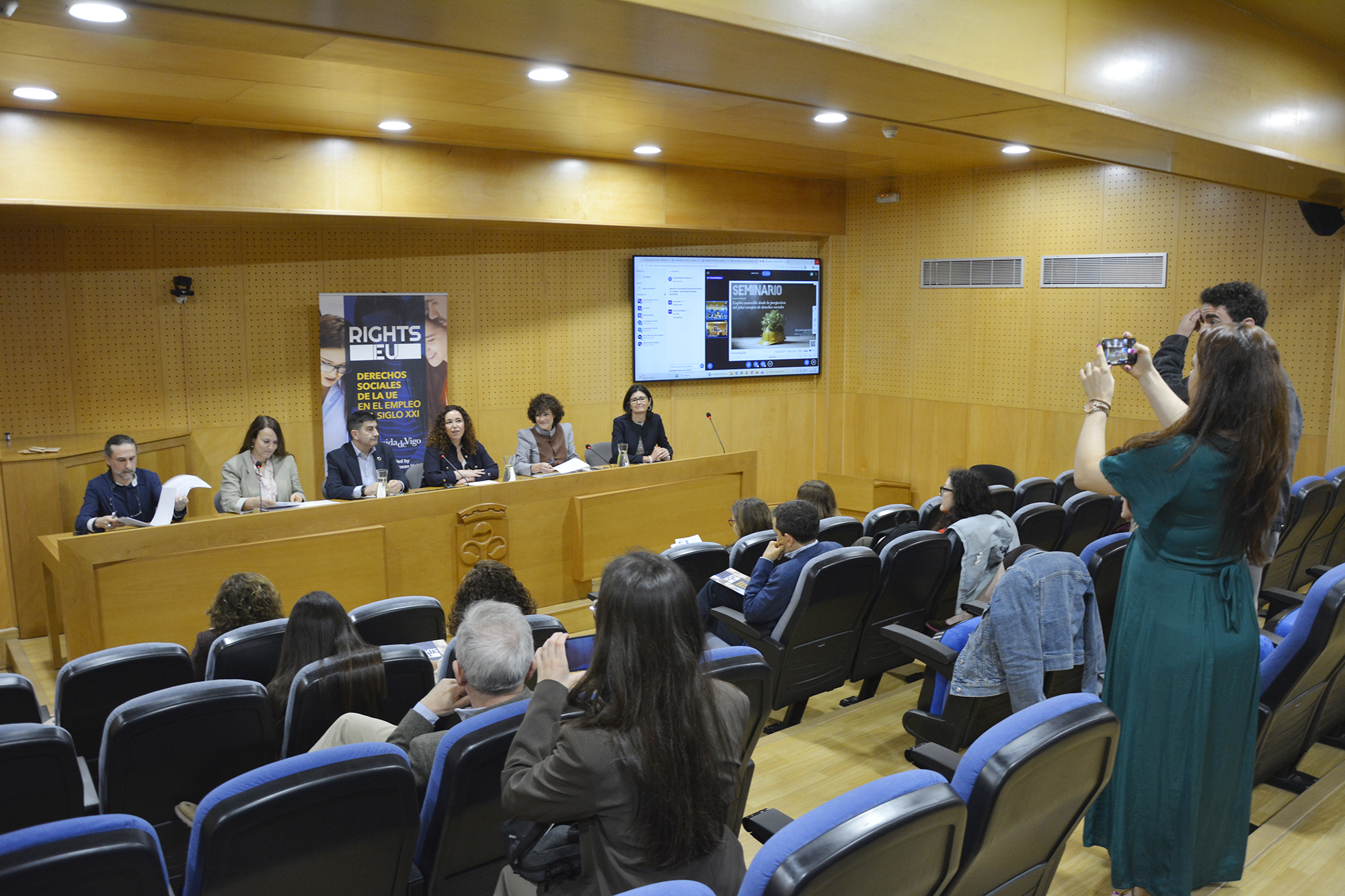
These issues form part of the areas explored in RIGHTSEU Module 7, dedicated to Digitalisation and Telework. From a legal and social perspective, the project encourages reflection on how employment relationships can adapt to technological change while continuing to protect social rights.
Digital transformation should not be measured solely by faster communication or the ability to work from anywhere, but also by its contribution to fair and sustainable working conditions.
Discover RIGHTSEU’s resources on the legal and social challenges of digitalisation at work.